
In the first 72 hours after a house fire, the electrical system goes through three steps: the utility or fire department cuts power, a licensed electrician makes the service safe and documents the damage, and temporary power is set up so restoration crews can work. Wiring, devices and panels that were exposed to heat, water or smoke are replaced rather than cleaned, because insulation that has been cooked cannot be trusted even when it looks fine. All of this happens under a City of Edmonton permit, and your insurer, not the electrician, decides what the policy covers.
Hour zero: power off and stay out
Firefighters normally have the utility disconnect the service while they are on scene, or pull the meter themselves, because water and live wiring do not mix. In Edmonton that disconnect and the later reconnect run through EPCOR’s Power Metering group. If the house still has power when the fire department releases the scene, the main should be shut off before anyone goes back inside, and if there is any doubt about reaching the panel safely, that is a call to an electrician or EPCOR, not a job for the homeowner.
Treat the whole system as live until a professional has proven otherwise. Fire moves wiring, drops ceilings onto cables and fills boxes with water, and a circuit that was dead when the crew left can become energized again if someone resets a breaker. That is the most important rule for the first day.
Hours 1 to 24: make-safe and the first walk-through
The first electrical visit is a make-safe. We confirm the service is isolated, lock it off, and identify anything that must be dealt with before restoration crews enter: a damaged meter base, a mast pulled loose, a panel that took water, cables hanging in the burned area. We photograph everything and start the written scope. Our 24/7 emergency service handles this call at any hour, because nobody wants a house sitting open and dark for a weekend.
Where the fire was contained, we may be able to isolate the damaged portion and leave undamaged circuits safe to re-energize once EPCOR reconnects. In a significant fire, the whole system stays off and temporary power takes over.
Why heat-exposed wiring gets replaced even when it looks fine
Fire can melt or char the insulation on building wire, leaving conductors exposed; it also makes copper brittle, fuses connections inside boxes and devices, and leaves conductive soot inside outlets, switches and the panel. Insulation heated past its rating may look intact and still crack when the cable is moved or fail months later under load. No field test proves a heat-stressed cable is good.
The same logic applies to anything that got wet from the suppression effort. Alberta’s guidance on flooded electrical equipment is blunt: for submerged breakers, GFCIs and fuses, the only safe action is to discard and replace the device. Fire suppression water is no gentler than flood water. So the scope for a fire-damaged area almost always includes:
- New branch circuit wiring in and adjacent to the fire area, back to a point where the cable was clearly outside the heat and water
- New receptacles, switches, boxes and light fixtures in that area
- A new panel or breakers where the panel was in or near the fire, or took water
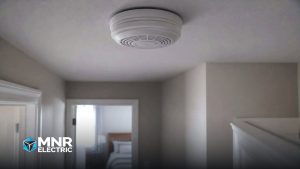
- New smoke and carbon monoxide alarms wherever existing units were exposed to heat or smoke
- Service entrance, meter base and mast inspected and replaced where damaged
Where the fire was small and contained, the scope is small too. Where it involved the attic or the mechanical room, the electrical scope can approach a partial rewire, so we break it out room by room.
Hours 24 to 72: temporary power for the restoration crew
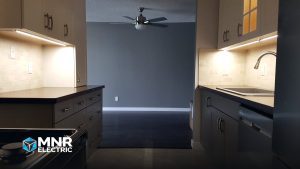
Restoration cannot start without power for dehumidifiers, air scrubbers, lighting and tools. If the service is sound, we install a temporary distribution point off it with GFCI-protected receptacles and get EPCOR to reconnect. If the service itself is damaged, we set a temporary service on a pole or stand; EPCOR offers temporary construction service for up to one year. Temporary wiring on a restoration site falls under Section 76 of the Canadian Electrical Code, which requires Class A GFCI protection on the 15 and 20 amp receptacles crews plug into. Details are on our temporary power page.
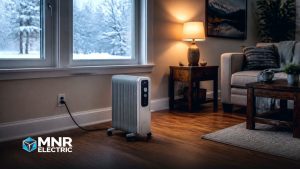
Temporary heat matters just as much in an Edmonton winter. Pipes in a house with the furnace off freeze within hours at minus 20, so the plan includes heater circuits sized for the load.
The scope your adjuster needs
A clean electrical scope speeds up the claim for everyone. We write ours so an adjuster can read it without an electrician beside them: what was damaged, what is being replaced, why, where the replacement stops, and what the permit and inspection will cover, with photos keyed to the plan and a note on the code requirements that drive the scope (new circuits must meet the current code even if the originals pre-dated it).
Three things to understand about the insurance side. First, MNR Electric does not adjust claims and does not decide what is covered; your insurer does, based on your policy. Second, we never waive or absorb deductibles; your deductible is between you and your insurer. Third, we work with adjusters and restoration contractors every week and will explain our scope to yours, but the decision remains theirs. More on our insurance claims electrical page and our fire and flood electrical restoration page.
Permits for the rebuild
Every electrical repair or alteration in Edmonton requires an electrical permit and inspection, and fire restoration is no exception. Rough-in inspection has to happen before drywall goes back up, because the City will not permit wiring that is already concealed. If the house is a rental or has a suite, the permit must be in a master electrician’s name. We pull the permit, schedule the inspections and hand you the passed final, the document your insurer and any future buyer will want. The full process is covered in our guide to electrical permits in Edmonton.
When to call an electrician, and what to do meanwhile
Call immediately after the fire department releases the scene, before the restoration contractor’s first visit if you can, so the house is made safe and documented first. Call if you smell burning or see smoke from any outlet, panel or fixture in a part of the house that was not involved in the fire. And call before anyone re-energizes anything. In the meantime:
- Do keep everyone out until the fire department and your electrician say the structure and the electrical system are safe.
- Do photograph damage for your records, from outside the affected area if that is all that is safe.
- Do call your insurer early and ask who they want on site and in what order.
- Do not reset breakers, flip the main, plug anything in, or run extension cords from a neighbour’s house until the system has been inspected.
- Do not clean or reuse smoke-exposed outlets, switches or alarms; they are replaced as part of the scope. See our post on Alberta alarm rules for where new alarms go.
Quick answers
Does all the wiring have to be replaced after a house fire?
Not all of it, but wiring exposed to heat, smoke or suppression water in and around the fire area is replaced, because heat-damaged insulation cannot be verified safe. Undamaged circuits elsewhere in the house can usually be inspected and kept.
Who turns the power back on after a fire in Edmonton?
EPCOR reconnects the service once a licensed electrician has made the system safe and, where required, a City of Edmonton inspection has passed. Homeowners should not reset the main themselves.
Do I need a permit for fire restoration electrical work?
Yes. All electrical alterations in Edmonton require a permit and inspection, and the rough-in must be inspected before new drywall covers the wiring.
Will my insurance pay for the electrical repairs?
That is your insurer’s decision based on your policy. MNR Electric provides a detailed scope and works with adjusters, but does not adjust claims or decide coverage, and does not waive deductibles.
How quickly can temporary power be set up?
Often within the first day or two, depending on the condition of the service and EPCOR scheduling. Temporary power keeps dehumidifiers, lighting and heaters running so restoration can begin.